
Labor-based dewatering tests under vacuum enable rapid evaluation of new fiber materials before expensive trials on large-scale production lines are required – saving time, energy and material.
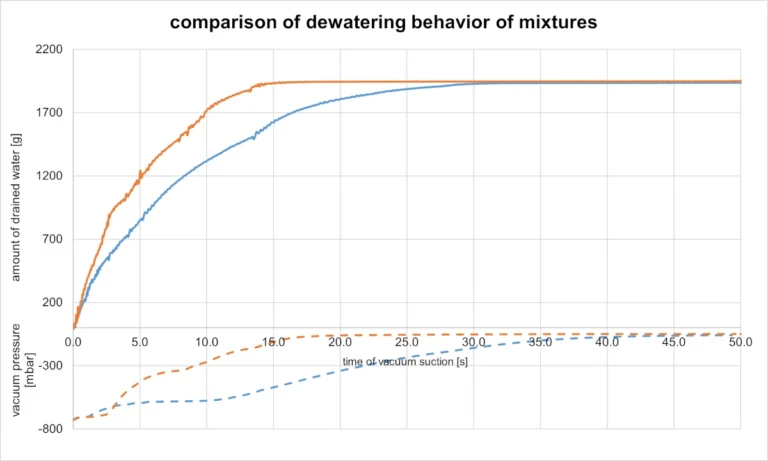
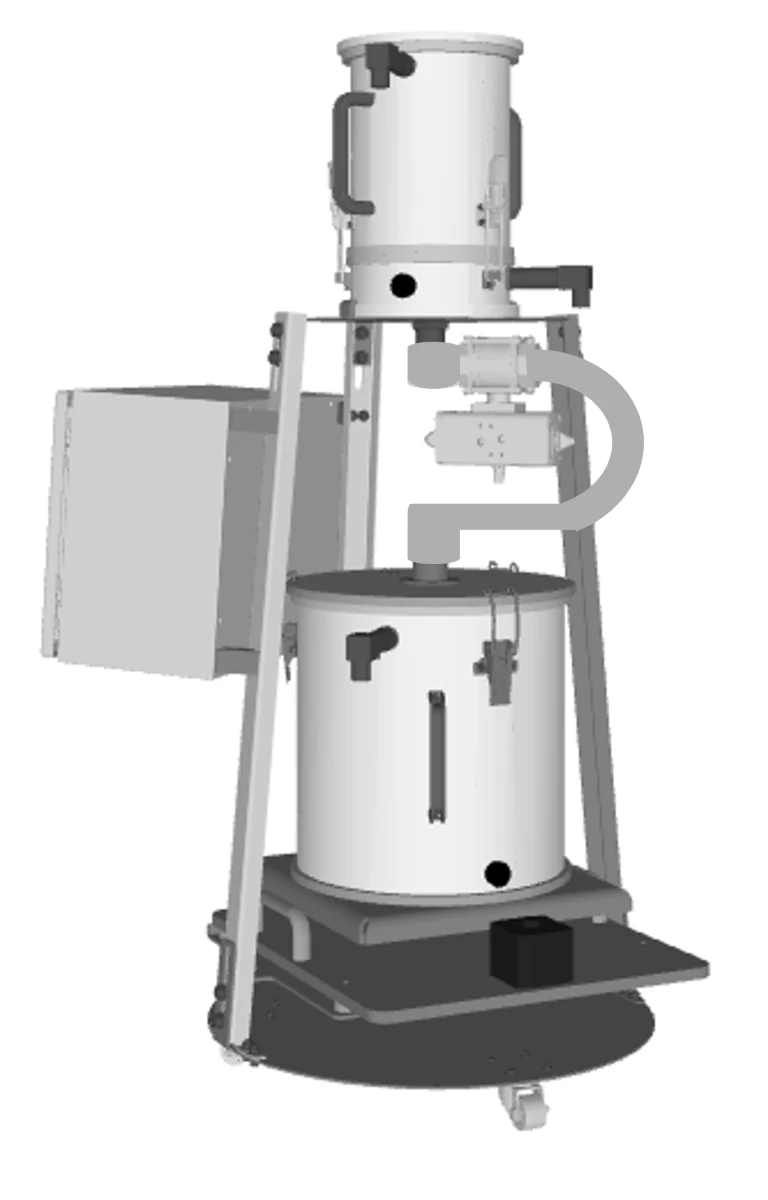
As part of a COMET project, a laboratory test rig was developed in cooperation with the HIRSCH Porozell GmbH (Glanegg, Carinthia) to specifically investigate and evaluate dewatering processes in pulp molding.
The system is suitable for both conventional processes and thermoforming technologies. It realistically represents this key process step at laboratory scale and allows essential material and process development questions to be addressed early on – without the need for large-scale production trials with significantly higher energy, time and material requirements. The test rig enables a systematic analysis of the dewatering behaviour of different raw material mixtures under vacuum conditions and reveals how quickly various fibre materials and material combinations dewater. These insights provide an important basis for process optimisation and contribute to shorter cycle times in industrial production.
Tests with additives or alternative materials (such as hemp or straw) can be carried out at laboratory scale to evaluate their influence on dewatering behavior. This allows unsuitable materials to be identified at an early stage and helps to avoid costly trials on production equipment as well as potential contamination or deposits in large-scale machines.
Thanks to integrated pressure sensors and a dedicated software system for data acquisition, pressure changes in the vacuum system during the dewatering process can be recorded in detail and monitored in real time. This makes it possible to better understand and assess the influence of the forming fibre mat on pressure behavior.
Impacts and effects
The laboratory test rig enables, for the first time, a targeted and reproducible evaluation of dewatering processes in pulp molding applications. Previously available measurement systems typically assess dewatering only gravimetrically and not under realistic vacuum conditions as used in industrial production, which limits the comparability and reliability of the results. With the new test rig, dewatering processes can now be investigated under application-relevant conditions, significantly increasing the validity and reliability of the measurement data.
Based on these measurements, initial robust conclusions can be drawn regarding dewatering behavior on production machines, allowing materials to be reliably assessed already at laboratory scale before being transferred to manufacturing. In addition, the test rig enables investigations into the influence of different screen mesh sizes, providing concrete decision support for process design, tool design and material selection.
In industrial practice, this leads to shorter development cycles, reduced production risks, more stable processes and lower energy and material consumption – delivering a clear economic and sustainability advantage.