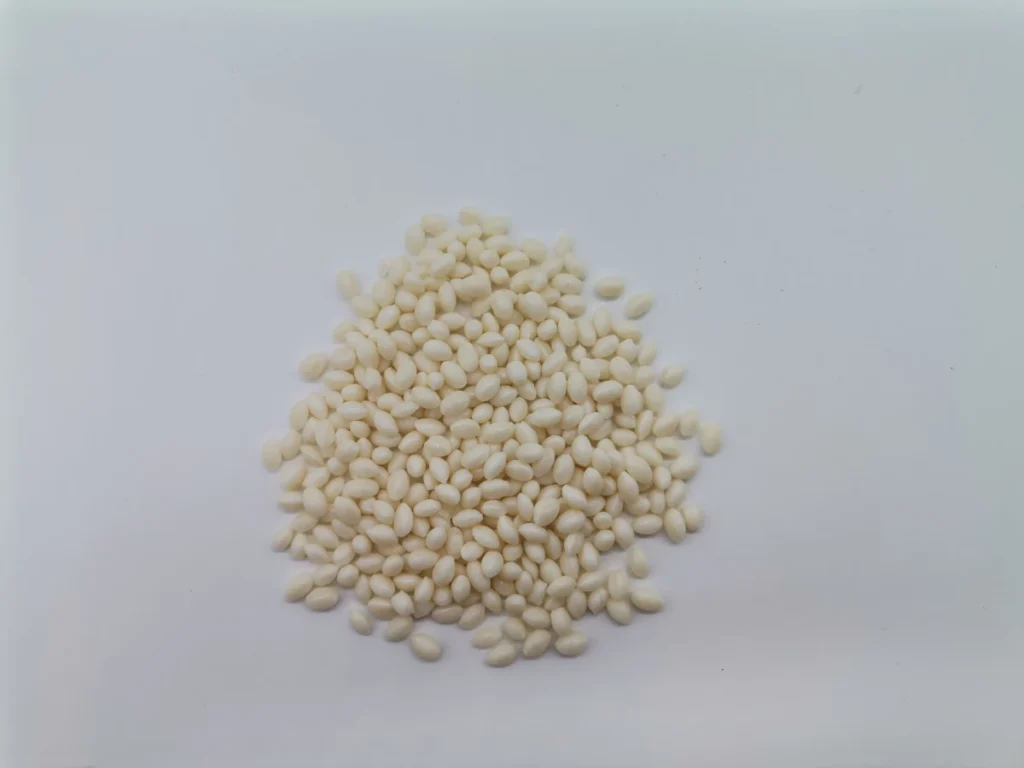
This success story describes the development of a biodegradable thermoplastic starch material for single-use plastic bags starting from potato starch with the agriculture company partner CPG Group. Through optimised plasticisation, extrusion, and formulation with biodegradable additives, the starch was transformed into a processable material compatible with standard film-blowing equipment. The result was a compostable bag material with mechanical performance comparable to conventional plastics and significantly reduced environmental impact.
In response to the environmental impact of conventional single-use plastic bags, a development program was launched to create a biodegradable alternative based on thermoplastic starch (TPS) derived from potato starch. Potato starch was selected due to its high availability, large granule size, and favorable amylopectin content, but its native structure required significant modification to become processable as a plastic. The key technical challenge was converting native starch into a thermoplastic material. This was achieved through controlled plasticisation using glycerol as the primary plasticiser. An optimised plasticiser content of 25–30 wt% enabled full gelatinisation and disruption of starch granules while maintaining mechanical integrity. Processing was carried out using a co-rotating twin-screw extruder with carefully managed temperature and shear profiles to avoid thermal degradation and ensure homogeneous melt formation.
To meet the mechanical requirements of single-use bags, the TPS formulation was further enhanced by blending with biodegradable polyesters to improve elongation and tear resistance, while maintaining compostability. Moisture sensitivity, a known limitation of starch-based materials, was mitigated through formulation control, inline degassing, and post-processing conditioning.
The optimised compound was successfully processed on standard film-blowing equipment. Stable bubble formation and consistent melt strength allowed the production of thin films suitable for lightweight bags. Mechanical testing confirmed tensile strength and elongation values comparable to low-density polyethylene in relevant directions.
Impacts and effects
Currently our company partner is in industrialisation phase to allow scale up of production of TPS pellets for final market applications with the support of new employees which have been educated by Wood K plus in course of the development project.
Developing thermoplastic starch from potatoes starch is reducing dependence on fossil-based plastics by providing a renewable, biodegradable material. It lowers plastic pollution and environmental toxicity, as it replaces single-use plastics. Using surplus or non-food-grade potatoes creates value from agricultural waste and supports a circular economy. Socially, it generates new income opportunities for farmers and create jobs in sustainable materials production, strengthening rural economies.