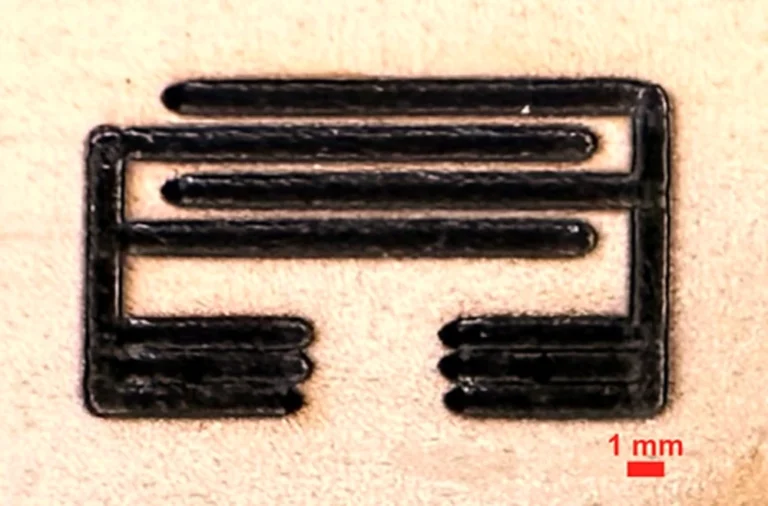
By converting wood-inherent constituents into conductive materials, sensors for measuring humidity, temperature, or adhesive curing have been developed.
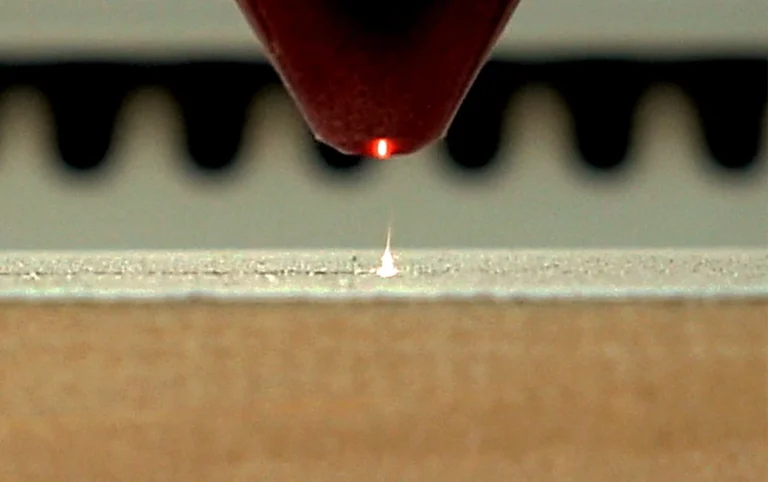
The project succeeded in implementing innovative sensor systems directly on wood surfaces that reliably measure moisture, temperature, or the curing behavior of adhesives. These seamlessly integrated sensors create significant added value: they are more environmentally friendly than conventional solutions, require no additional carrier materials, and fit into the wood composite without a predetermined breaking point.
The basis for this is laser-induced graphitisation (LIG), which makes the wood surface electrically conductive without the need for prior coating. Using a simulation model of the laser treatment and a comprehensive study to determine the optimal laser parameters, settings were identified that enable the direct conversion of wood into electrically conductive graphite. The result is robust, precise, and scalable sensor structures.
Impacts and effects
The sensors developed replace external measuring systems. At the same time, the process reduces waste materials and enables sustainable end-of-life strategies. The innovative technology turns wood into an active, data-capable building material. This opens up new possibilities for intelligent components, adaptive designs, and sustainable production processes – a decisive step toward digitized and resource-efficient wood processing and wood utilisation, especially for the construction industry.
The process was developed as part of the FFG i3Sense module in the research area Wood Materials Technologies, Tulln using a conventional CO2 laser. The commercially available technology is therefore scalable and can be applied to large-format components.