Wood is a climate-friendly building material and has the potential to store carbon in buildings in the long term. Within the project, special wooden construction elements were developed that can be reused multiple times. After testing small samples, a full-scale construction system was successfully developed, that enables a significant CO₂ reduction in the construction sector.
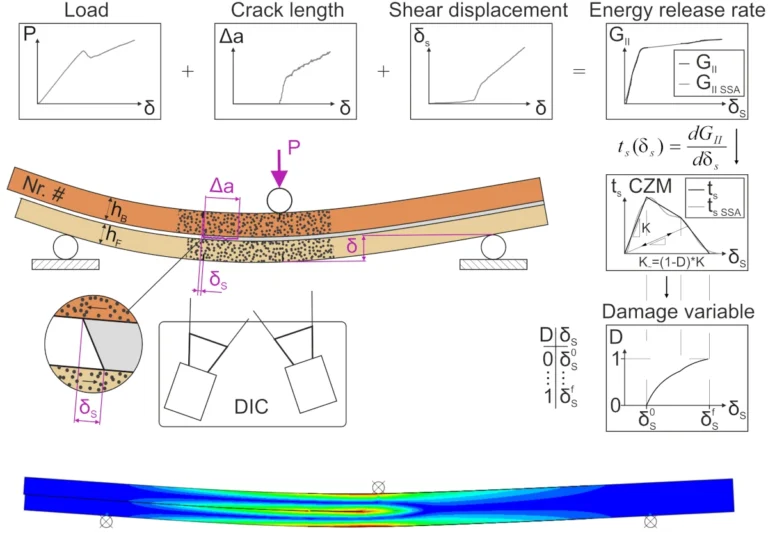
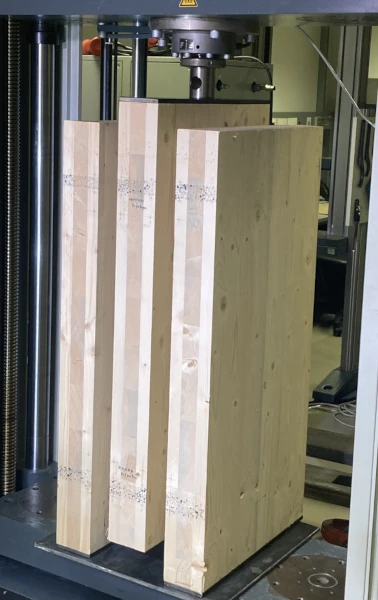
Wood, a renewable raw material, is considered a climate-friendly building material and therefore has a clear advantage over fossil raw materials. In addition, wood offers the possibility of storing the carbon bound in it in the construction sector over a long period, thus creating a genuine CO2 sink and relieving the burden on the climate. This is made possible by the high degree of prefabrication in timber construction, which allows timber construction elements to be designed in such a way that they can be reused several times. The project developed wood-hybrid building elements with the aim of keeping them in the material cycle for as long as possible. To use the innovative wood-hybrid building elements, their fracture behavior had to be determined. To this end, tests were carried out on small samples (end-notched flexure (ENF) tests) and finite element method (FEM) simulations were performed.
Material combinations such as wood-concrete, wood-metal, and wood-wood were evaluated. Special “cohesive zone” models were used to determine the softening of various bonded material combinations.
This model was then used to draw conclusions about the behavior of wood-hybrid building elements on a real scale.
Impacts and effects
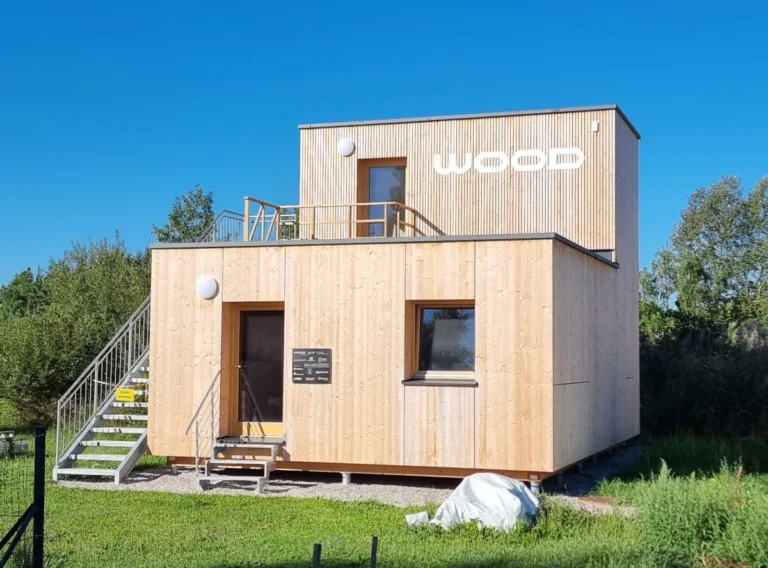
Based on these fundamental findings, a construction system was developed that allows wooden building elements to be reused multiple times without additional processing or modification. The functionality of this system was demonstrated using a prototype building, which was dismantled after its initial construction and rebuilt in a different configuration at a second location. The building elements could be reinstalled without any reworking. After just three reuse cycles (150 years), we create a significant carbon sink—ie., biogenic carbon is bound in the construction industry in the long term and thus removed from the atmosphere. In this way, we are making an active contribution to reducing climate-damaging emissions