Ceramic sliding bearing bushes made from wood as innovative Game-Changer for bio-based materials in motorsports
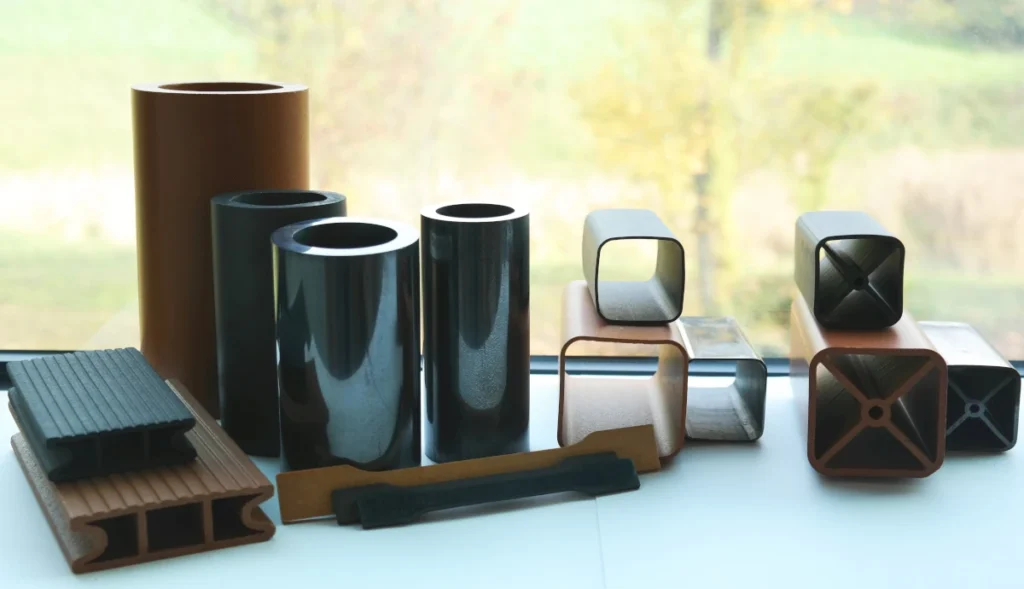
Wood K plus has previously developed a process for the preparation of bio-based porous carbon preforms that can be subsequently used for the production of silicon carbide (SiC) ceramic bodies. The carbon preforms are manufactured from waste and by-product streams such as sawdust and lignin, blended with polymers. Shaping of the wood polymer composites (WPC) is performed using conventional polymer-processing techniques like extrusion, injection molding or 3D-printing. Subsequent thermal treatment converts the shaped components into porous carbon preforms. Owing to the use of a thermosetting matrix, the components retain their geometry during conversion, exhibiting only a controlled and uniform shrinkage. The porosity of the carbon preforms can be precisely tailored through the addition of pore-forming additives that fully volatilise during thermal processing. In an additional thermal processing step, the porous carbon preforms are infiltrated with liquid silicon, which reacts at temperatures around 1600 °C to form SiC ceramics.
This approach offers several advantages over conventional manufacturing routes. Notably, tool wear is completely avoided, as the extremely hard ceramic phase is generated after shaping. Besides the possibility to use sustainable raw materials (wood-based filler, lignin, recycled silicon), the tunability of the ceramics properties is of particular significance. Ceramics containing up to 95 % SiC with excellent mechanical and thermal performance can be produced. By precisely controlling the residual carbon content, electrical conductivity or tribological properties can be tailored — properties that cannot be achieved through the simple addition of carbon or graphite powders.
In direct projects with the company SKF, this process was adapted to develop sustainable ceramic sliding bearing bushes. Optimised WPC mixtures were shaped into 40 mm thick plates by compression molding. These plates were transformed to porous carbons in an adapted pyrolysis process. Cylinders of the required geometry were machined from the porous carbon plates and converted to SiC ceramic using the previously established infiltration process.
Impacts and effects
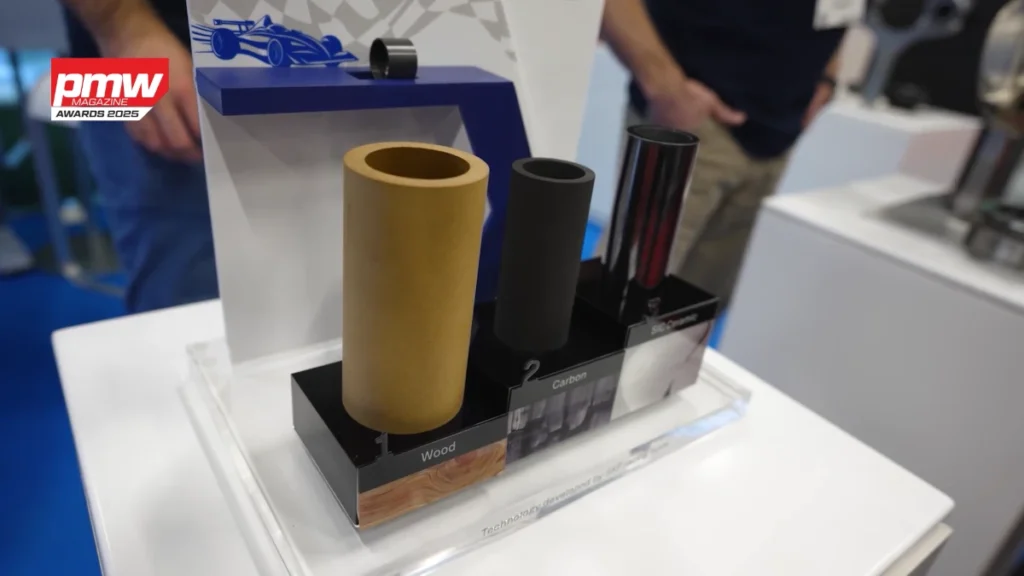
Prototype sliding bearing bushes have been tested and show equivalent or even less friction and wear than conventional bushings in bronze, silicon nitride, sintered silicon carbide, zirconia or alumina. First calculations showed that the CO2 footprint can be reduced by at least 50 % compared to conventional ceramics or metals. SKF has presented samples of the whole process chain at the Professional Motorsport World (PMW) Expo in Cologne in November 2025. The wood-based ceramic bearing was awarded “Chassis Technology of the Year – Mechanical”